

Explainer Videos Boost Visibility and Conversions
This article was updated on September 29, 2026.
Video isn't exactly a new idea in marketing anymore. It's become part of the furniture.
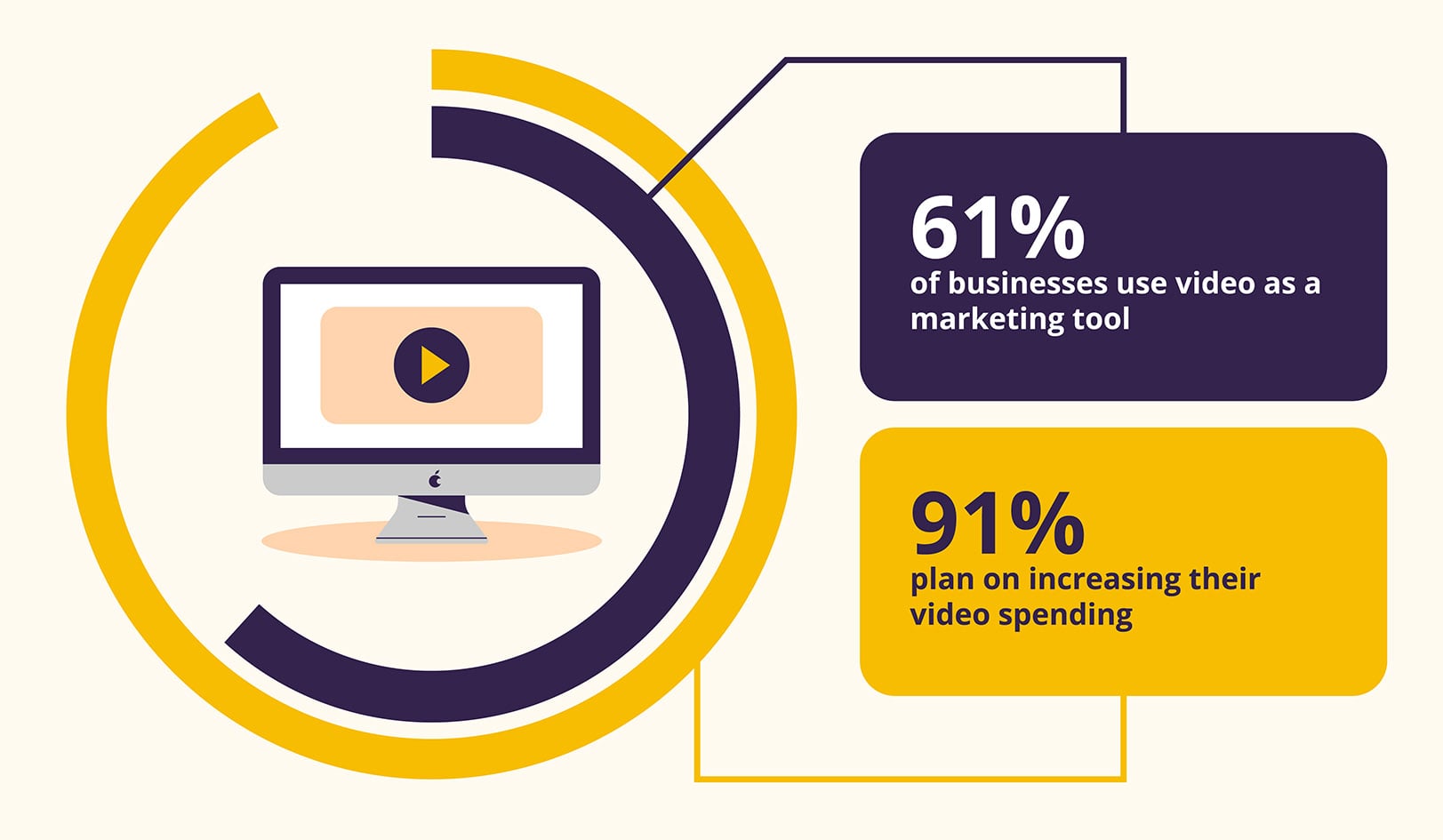
According to Wyzowl’s 2026 State of Video Marketing, 91% of businesses use video as an advertising tool. Explainer videos remain a popular format because they help businesses turn complex products, services, and ideas into something audiences can understand quickly. There is a pretty simple reason for that.
Some things are just easier to show than explain.
A new technology, an unfamiliar service, a complicated process, or a product that doesn't fit neatly into one sentence can turn into a wall of copy very quickly. An explainer video gives you another option: combine visuals, words, movement, sound, and storytelling into something people can understand without needing an instruction manual and a pot of coffee.
Done well, it can explain what you do, demonstrate why it matters, and inject some personality into the process.
And personality matters.
What Is an Explainer Video?
An explainer video is a short, focused video created to explain a product, service, process, idea, or company in a clear and engaging way.
Some are animated. Others use live action, screen recordings, motion graphics, or a combination of techniques.
The format isn't really what defines an explainer video; its job does.
A good explainer takes something your audience needs to understand and finds the clearest, most engaging way to communicate it. An additional benefit is that a strong video SEO strategy can help explainer videos reach more of the right audience.
That might mean using a visual metaphor to simplify an abstract concept. It might mean showing someone using your product. Or it might mean taking a complicated SaaS platform and turning all those APIs, dashboards, workflows, and integrations into an animation that makes sense.
You aren't limited to explaining what something is. You can show people how it works, why they should care, and what changes for them when they use it.
Types of Explainer Videos
Explainer videos come in a lot of flavors.
Live-action explainers use real people and environments, which can be particularly effective when trust, personality, or a physical product is central to the story. There's also been a huge surge in user-generated-style content. Here's a little secret: some of that "homegrown" content is considerably more produced than it looks. It wasn't necessarily filmed by your neighbor Sarah between loads of laundry.
Animated explainer videos give you considerably more freedom. Products can come apart, ideas can become characters, data can travel across the screen, and things that don't physically exist can suddenly have a visual language. It's truly amazing how animated objects, text, and characters can explain really difficult ideas.
Whiteboard explainers use illustrated drawings and narration to walk an audience through an idea or process. They're still around, although contemporary motion design usually provides far more possibilities for brands that want a distinctive visual style.
Then there are screencast and product-demo explainers, which are particularly useful for software and digital platforms. You can demonstrate the actual interface while using 2D animation and motion graphics to call attention to features, simplify workflows, or explain what's happening behind the scenes.
And there is absolutely no rule saying you have to choose only one.
Live action can blend into animation. Screen recordings can live inside motion graphics. A character can walk through a real environment. Sometimes the most interesting solution is the one sitting between categories.
Why Explainer Videos Work
Good explainer videos create clarity. That's their real superpower.
A potential customer may be interested in your product but still have questions.
- What exactly does it do?
- Who is it for? How does it work?
- Why is it different?
- What problem does it solve?
Every unanswered question creates a little bit of friction. Your offering should be frictionless.
An explainer gives you an opportunity to remove some of that friction without turning the experience into a sales presentation.
Instead of asking someone to connect five paragraphs of information in their head, you can coordinate narration with visuals and build the explanation piece by piece in a short and precise video. The viewer sees the relationship between the ideas instead of simply reading about it.
That is particularly useful with technology, healthcare, financial services, manufacturing, SaaS, and other industries where the thing you're selling may be valuable—precisely because it solves a complicated problem.
Current research supports that idea. According to Wyzowl's 2026 State of Video Marketing:
- 96% of people have watched an explainer video to learn more about a product or service.
- 93% of video marketers say video has helped increase understanding of their product or service.
- 85% of consumers say a video has convinced them to buy a product or service.
- 89% of consumers say video quality affects their trust in a brand.
That last number is particularly important. Making a video is one thing. Making a video that represents your company well is another.
Explainer Videos Give Imagination a Job
Here's where things get fun. Animated explainers doesn't have to obey the laws of physics.
Want to visualize your SaaS platform communicating with a dozen APIs in real time? Fine.
Want to shrink the viewer experience and take them inside a product interface? Done.
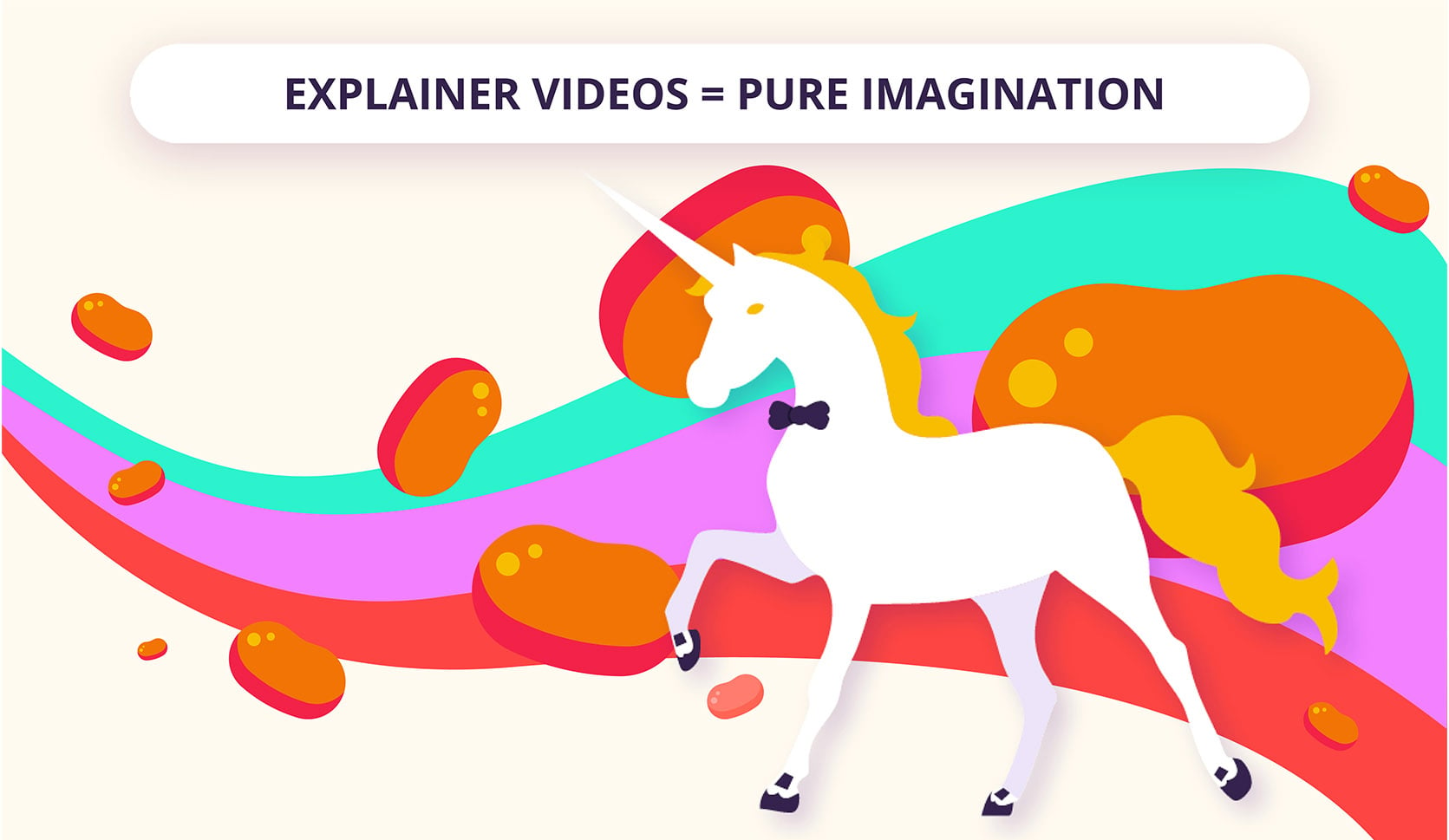
Want a tap-dancing unicorn selling gourmet jelly beans? No problem, imagination is at the heart of animation.
That's what makes motion graphics and animation so useful for explainer videos. They transform ideas into a visual metaphor that can capture your audience's attention.
Data can move. Connections can form. Workflows can unfold. Abstract ideas can become objects. A metaphor that would take three paragraphs to explain can sometimes become obvious in a few seconds.
The point isn't to add animation just because it looks cool. The animation should be doing a job.
A good visual reinforces the message. A great one makes the idea easier to understand than it was before.
That's where strong scripting and visual design start working together.
Explainer Videos Can Make a Brand Feel Human
There’s another side to explainer videos that isn’t quite as practical.
Emotion.
People don’t experience a brand as a collection of selling points. They experience its personality.
And that personality can come through in all kinds of explainer videos.
In animation, it might be the illustration style, pacing, transitions, voiceover, music, or sense of humor. In a live-action explainer, it could come from the people on camera, the setting, the cinematography, or simply the way someone speaks directly to the audience. A product demo or screencast can feel polished and technical, warm and approachable, or fast and energetic depending on how the interface, narration, graphics, and editing work together.
That’s why a good explainer isn’t simply an animated PowerPoint presentation—or a talking head reading a script into a camera. Every creative decision contributes to your brand voice and how the company feels.
Your explainer can be funny or serious, elegant or playful, polished and sophisticated, or warm and approachable. It can even be a little strange, as long as that fits the brand.
The important thing is that the tone belongs to the brand. There isn’t one correct style.
There is, however, a style that feels correct for you.
Not All Explainer Videos Are Created Equal
Search for an “explainer video company” and you won’t exactly be short on options.
Prices vary. So does quality.
Templates, AI, and inexpensive production tools have made video creation faster and more accessible than ever. That can be a good thing—but easier production doesn’t automatically mean better communication.
The real work happens before the cameras roll or the animation begins.
A strong explainer starts with understanding the audience, the brand, the message, and the problem you’re trying to solve. From there, the right approach might be live action, motion graphics, a product demonstration, 3D animation, or a combination of styles.
The goal isn’t to use the most impressive technique. It’s to choose the one that explains the idea best.
That same thinking applies to sound. Music, voiceover, and sound design can add energy, emotion, and clarity when they support the story rather than compete with it.
Ultimately, a good explainer should feel on-brand from beginning to end—visually, verbally, and creatively.
That's important because your video isn't living in isolation. It's another piece of your larger brand storytelling.
How Long Should an Explainer Video Be?
There isn't a stopwatch somewhere that automatically makes an explainer ineffective at 91 seconds.
But brevity helps.
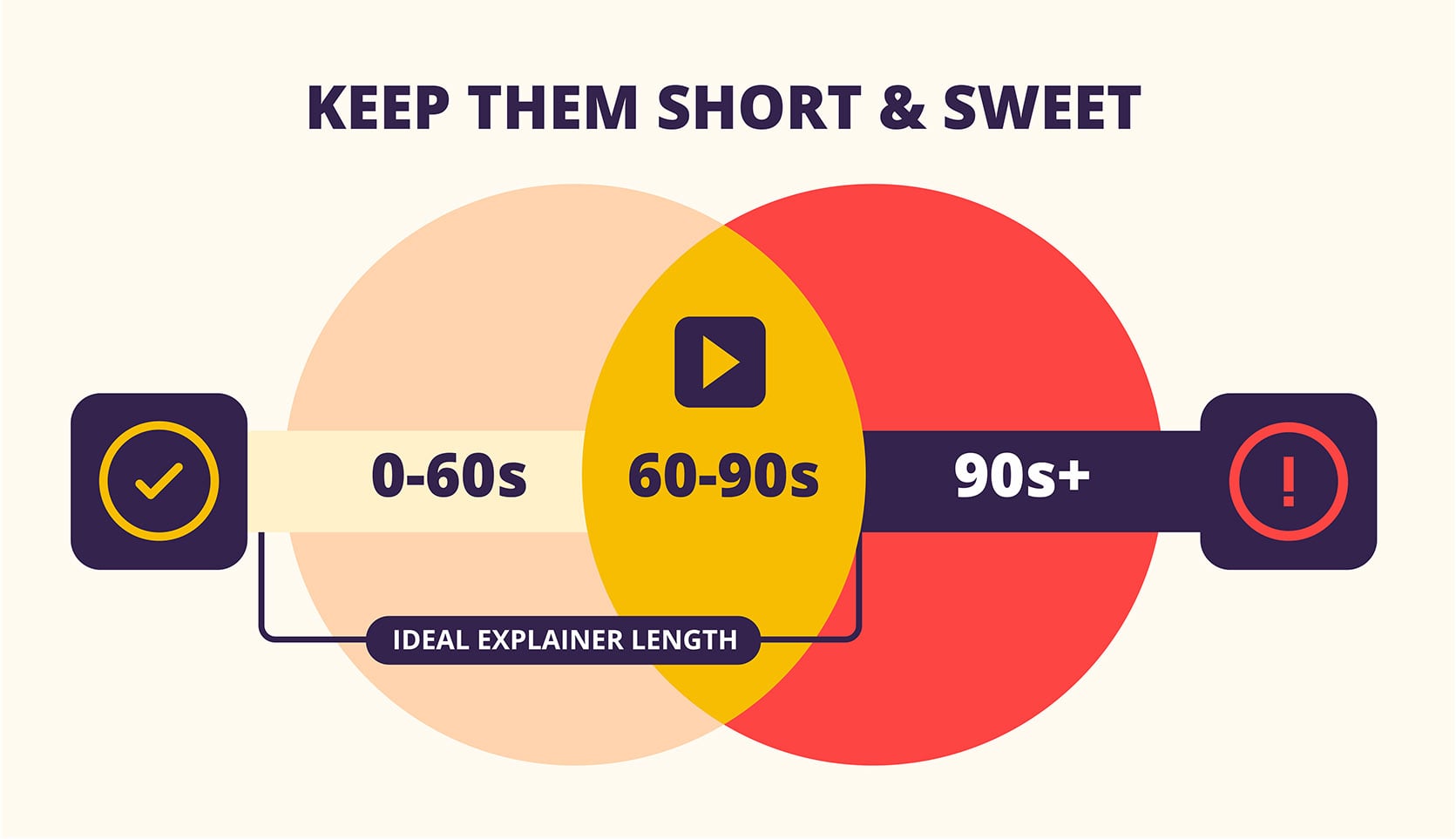
For most marketing-focused explainers, 60 to 90 seconds is a useful target. The right length ultimately depends on the audience, the channel, and the purpose of the content.
That distinction matters.
A homepage explainer introducing your company has a different job than a five-minute product demonstration for someone who is already evaluating your software.
Think of the short explainer as a warm introduction. The deeper content is the conversation that follows.
The mistake is trying to cram the conversation, owner's manual, FAQ, company history, feature list, and closing argument into the introduction.
If you're producing a short explainer, decide what you want the viewer to understand and do by the end.
Then protect that idea ruthlessly.
Start With the Script
The video may get most of the attention, but the script is where a strong explainer begins.
Before deciding what anything looks like, you need to know what you're trying to say.
Who is the audience? What problem are they dealing with? What do you want them to understand? Why should they care? And what should they do next?
A good script doesn't try to fit every selling point the company has developed since 1987 into 90 seconds—it prioritizes.
At Mighty Fine Production Company, we generally want to get to the audience's problem quickly, establish why it matters, introduce the solution, demonstrate the value, and leave the viewer with a clear next step.
Simple doesn't mean simplistic.
It means understanding the idea well enough to remove what isn't helping.
Let the Visuals Explain Something
Once the script is in place, the visuals should contribute information—not simply decorate the narration.
If the narrator says, "Our platform connects all your customer information in one place," we probably don't need the exact same sentence floating across the screen.
Show the idea.
Maybe scattered pieces of information suddenly organize themselves. Maybe disconnected platforms begin communicating. Maybe a tangled workflow straightens itself out.
That's the advantage of visual storytelling. The audience can hear one part of the idea while seeing another.
When the two work together, you can communicate quite a bit without making the viewer feel like they're doing homework.
Don't Forget Sound
Watch a compelling animated piece with the sound turned off and you'll notice something missing almost immediately.
- Movement has less weight.
- Transitions lose some punch.
- The entire thing feels flatter.
Music and sound design don't need to overwhelm the video. They should be in harmony.
A tiny sound at exactly the right moment can do more than a giant cinematic boom every six seconds.
Music creates atmosphere. Sound effects create texture. Voiceover controls pacing and provides the story a human presence.
The goal is to make all of those elements feel like they belong together.
If the viewer notices the sound design because it's fighting with everything else, something has probably gone wrong.
Where Should You Use an Explainer Video?
One of the advantages of making a strong explainer is that it doesn't have to perform one job in one place.
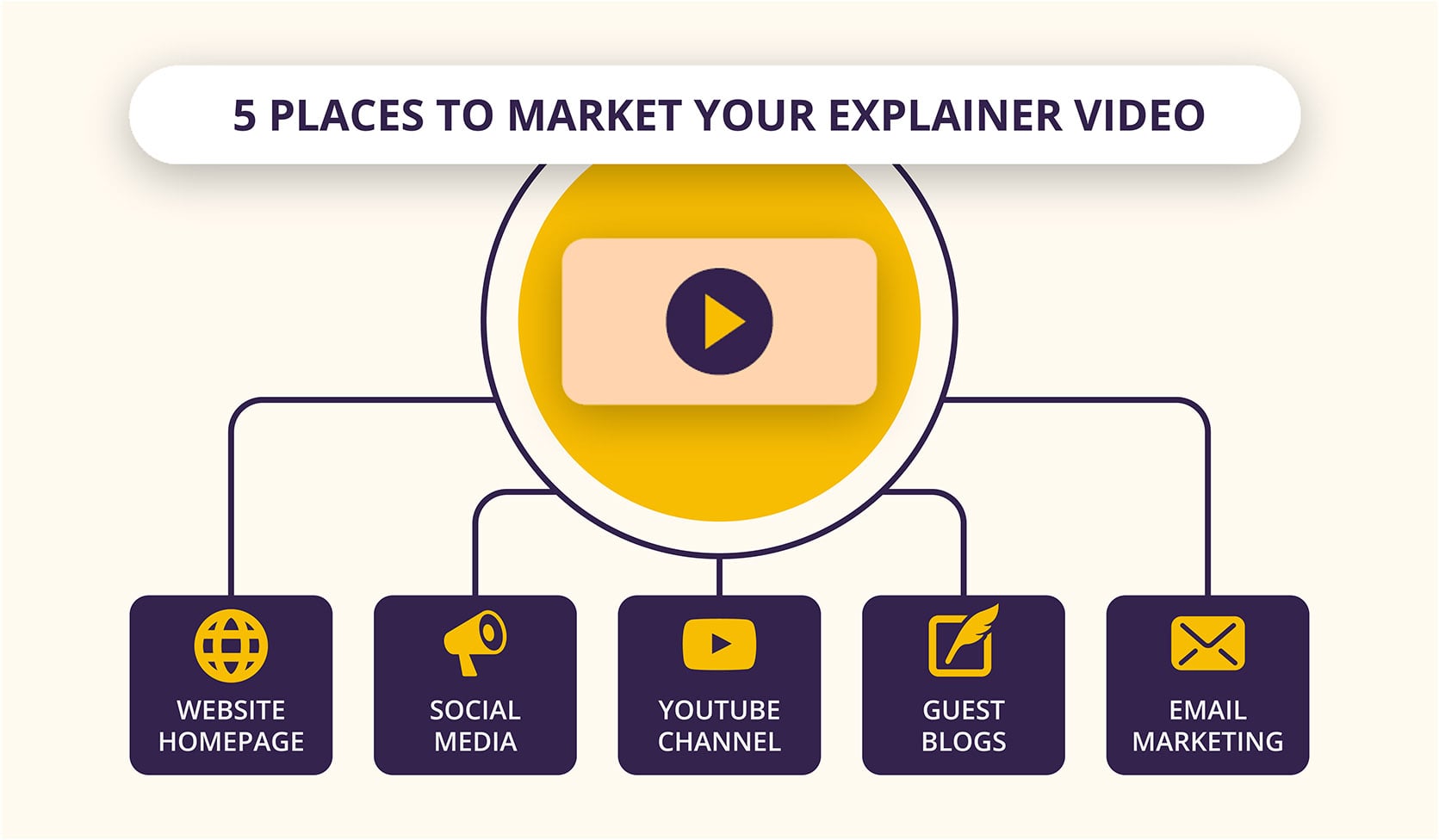
Your Website and Landing Pages
A homepage, product page, or landing page is an obvious home for an explainer. Visitors who don't know much about the company can quickly get oriented without having to hunt through several pages.
Landing pages have one job: keep the message focused and move someone toward an action. An explainer can do a lot of heavy lifting there, particularly when the offer requires more explanation than a headline and a few paragraphs can comfortably provide.
Video can also be eligible to appear in different areas of Google Search when it's implemented correctly. Video isn't an automatic SEO button, but it can create additional ways for your content to be discovered.
Sales Emails and Presentations
Occasionally your salesperson has explained the same thing 400 times.
Give them some help.
A good explainer can introduce the company before a meeting, reinforce a concept after a sales call, or provide a consistent way for a team to communicate a complicated offering.
Social Media
You don't necessarily have to post the entire video. Once produced, an explainer can be adapted into different social media video types to extend its reach.
Cut it down. A 90-second explainer can become several shorter pieces of social media video content, each focused on a different idea.
Individual moments from your explainer can take on a second life. A clever visual metaphor might become a ten-second social clip, a product demonstration could be edited into a Reel, or a memorable line from the voiceover could inspire a completely new piece of content.
YouTube
YouTube gives your explainer a longer shelf life and another place for people to discover your brand. The full video can live there as an evergreen resource, while shorter clips can be shared across social channels and point viewers back to the complete story.
Video Advertising
Explainer-style storytelling can also work extremely well as a video marketing tool in advertising. This approach is especially effective when a product or service requires more context than a traditional ad can provide.
The key is adapting the story to where the ad will appear. A longer explainer might introduce the full idea, while shorter campaign versions can focus on a single problem, benefit, feature, or takeaway.
That gives you the flexibility to build multiple ads from the same creative concept without starting from scratch every time.
That's how you start getting more mileage from the original investment.

How Do You Measure Whether an Explainer Video Worked?
Views are nice. But views alone don't tell you very much.
Success depends on why you made the video in the first place.
If the goal is awareness, reach and watch time may matter. If it's sitting on a product page, you may care more about engagement, clicks, leads, or conversions. A sales team may care about whether prospects arrive at meetings with a better understanding of the product. Customer support may care whether the video reduces repetitive questions.
The metric should follow the objective.
Marketers evaluate video performance using a combination of metrics:
- Views,
- Engagement,
- Leads and clicks,
- Customer retention,
- Brand awareness
- Direct sales
That's a much healthier way to think about performance.
Decide what the video is supposed to accomplish before determining whether it has succeeded.
You must use a platform that records behaviors so you have the metrics needed to see what's working and what's not.

Final Thoughts: Good Explainer Videos Respect the Audience
That might be the simplest way to put all of this together.
Respect people’s time. Don’t complicate something just to prove how sophisticated your company is, and don’t add animation or production flourishes simply because you can.
A good explainer should make complicated ideas feel simple, not simplistic. It can educate, entertain, and give a brand personality without burying the useful part under corporate throat-clearing.
Creating that kind of video isn’t necessarily easy. Making the final product feel effortless is part of the craft.
At Mighty Fine Production Company, the process starts by understanding what makes your product, service, or idea worth talking about. From there, we shape the script, visual direction, production style, voiceover, music, and sound design around one goal: helping the audience understand the story.
Because when an explainer really works, the viewer doesn’t walk away thinking:
“Wow, that was beautiful, but I still don’t understand what they were trying to say.”
They understand the message—and remember the brand. That’s the win.
Sometimes all it takes to start is an idea.
Set up an informative consultation, and we can see where it can go.
Frequently Asked Questions About Explainer Videos
What is an explainer video?
An explainer video is a short video designed to explain a product, service, process, company, or idea in a clear and engaging way. It can use animation, live action, motion graphics, screen recordings, or a combination of styles.
Why are explainer videos effective for marketing?
Explainer videos help turn complicated information into something easier to understand. By combining visuals, narration, movement, and storytelling, they can introduce a product, demonstrate value, answer common questions, and help audiences understand what a company does.
What are the main types of explainer videos?
Common formats include animated explainers, motion graphics, live-action videos, screencasts, product demonstrations, whiteboard animation, and hybrid approaches that combine several techniques.
How long should an explainer video be?
For many marketing applications, 60 to 90 seconds is a useful target. The right length ultimately depends on the subject, audience, platform, and how much information the viewer actually needs.
What makes a good explainer video script?
A strong script focuses on one primary idea. It identifies the audience's problem, explains the solution clearly, demonstrates why it matters, stays consistent with the brand's personality, and gives the viewer a logical next step.
Are animated explainer videos better than live-action videos?
Neither format is automatically better. Animation is particularly useful for abstract ideas, SaaS products, technology, data, workflows, and things that are difficult to film. Live action can be stronger when people, personality, physical products, or real environments are important to the story.
Where can explainer videos be used?
Explainer videos can work on websites, landing pages, YouTube, social media, sales presentations, email campaigns, digital advertising, product pages, onboarding materials, and customer-support content.
Can an explainer video be repurposed?
Absolutely. A longer explainer can be divided into shorter social clips, advertisements, product demonstrations, presentation segments, still graphics, and other branded content.
How do you measure the success of an explainer video?
Start with the goal. Depending on the project, useful measurements might include watch time, engagement, click-throughs, leads, conversions, sales, website behavior, or whether customers have a better understanding of the product or service.
How much does a custom animated explainer video cost?
Pricing depends on the scope of the project. Script development, custom illustration, animation style, 3D work, voiceover, music, sound design, length, and the number of deliverables can all affect the investment. A custom explainer created specifically for a brand is a very different production from a template-based animation.