

What comes after your video is finished?
You’ve spent the time finding the right production company to produce your marketing video. Your team, in partnership with the production company, created a great script. The shoot has come and gone; final edits are in, and now you’re left with a polished video to share with the world. What now?
What purpose does it serve? Where will it live online? These questions may pop into your head even after everything’s said and done. That said, it’s never too late to focus on video analytics to optimize your online video!
With online users streaming 38.2 billion videos per year, it’s safe to say online video content has quickly become a valuable part of every content marketing strategy. From small start-ups all the way up to Fortune 500 companies!
Let’s not forget, your promotional video content can be first-in-class but fall flat if not utilized and presented correctly. Define where your video will live, what purpose it serves, and who it’s intended audience is. By doing this, you can help develop a clear plan of action for your online video.
Why Video Analytics Matter
- Heatmaps and engagement tracking help you identify which sections drive drop-off and which convert
- 89% of marketers say video delivers a positive ROI
- 90% of consumers say video helps them make buying decisions
- Video CTAs increase click-through by up to 380%
- Optimized video placement and A/B tested CTAs can improve conversions by 80% or more
Guide To Video Analytics Meaning
Get the Most Out of Your Video Advertising: Ways to Optimize Video Online
Video hosting services like Vimeo and Wistia are beginning to milk video content for all their worth by enabling videos to be a point of conversion. Videos can help feed sales funnels, populate email lists, and drive sales tremendously.
We have broken down some features hosting sites (like Wistia and Vimeo) offer. These features allow you to engage and convert viewers, along with insight and video analytics provided by most video platforms in 2025.
Custom Brand Your Online Video
For example, Wistia enables users to brand their pages and video players. You can pick custom colors, add your logo, and select a cover frame that fits each video you upload to Wistia. These tools allow you to inject your identity into your audience’s viewing experience. So they have a perception of a completed on-brand experience. They are engaging "directly with you."

Online Video Call-To-Actions
We see calls to action everywhere—on YouTube videos, in Spotify ads, even at the end of your favorite podcasts. They’re the prompts that nudge us to subscribe, download, sign up, or buy.
When used strategically, CTAs guide your audience through a clear next step—whether that’s taking advantage of a promo, joining your email list, or checking out a product. In video, clickable CTA buttons can turn passive viewers into active leads.
Learning how to time, place, and design your CTAs is key to getting the most out of your content. This can measured with a high level of accuracy with video analytics.
According to Wistia:
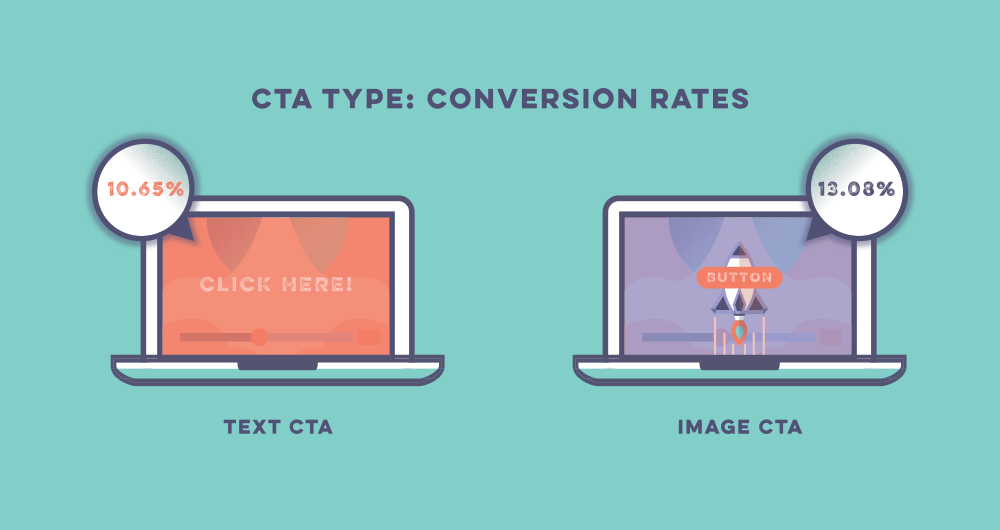
- Less than 1% use HTML-based custom CTAs
- 73.5% of users use text-based CTAs
- 26.2% use image CTAs
Timing is Everything: CTA Placement
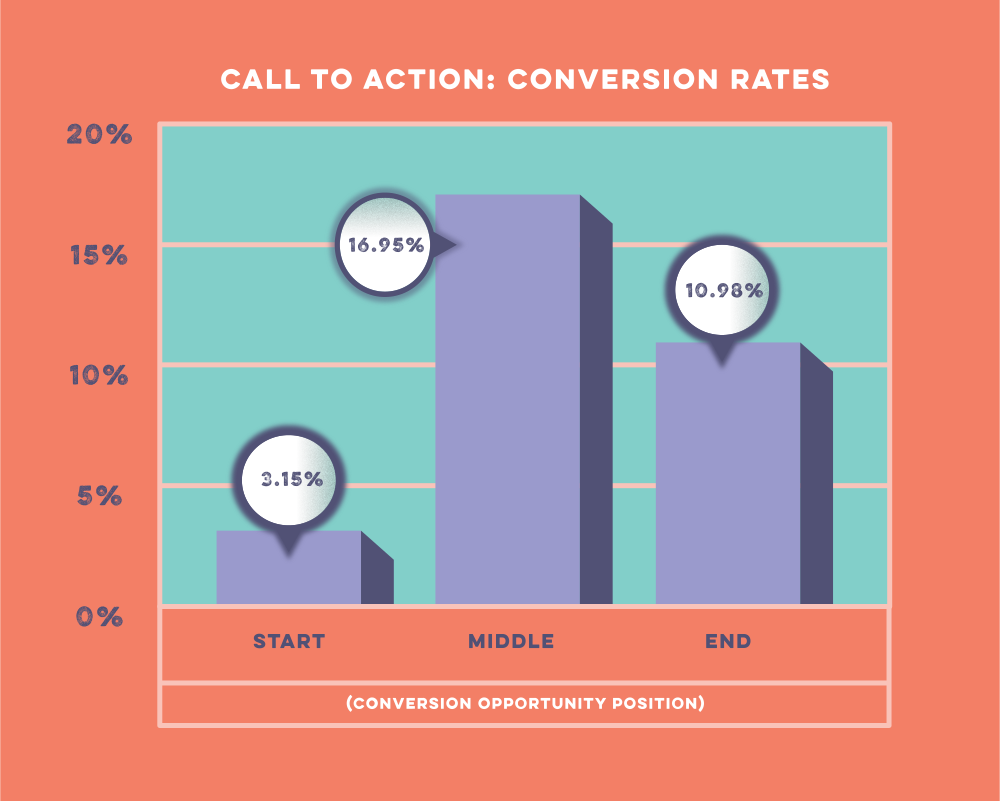
There's a sweet spot in video advertising where engagement intersects with intent—and the key to unlocking that moment is timing. Drop your call to action too early and you risk losing attention. Wait too long, and your audience might already be gone.
That’s why it’s critical to test when you present your CTA. Most video hosting platforms—like Wistia, Vimeo, and Vidyard—let you place CTAs at different points in the video: the beginning, mid-roll, or the end.
Each placement has pros and cons depending on your goal.
The graph below shows how CTA placement impacts conversion rates, based on video analytics data from Wistia.
The Power of Words
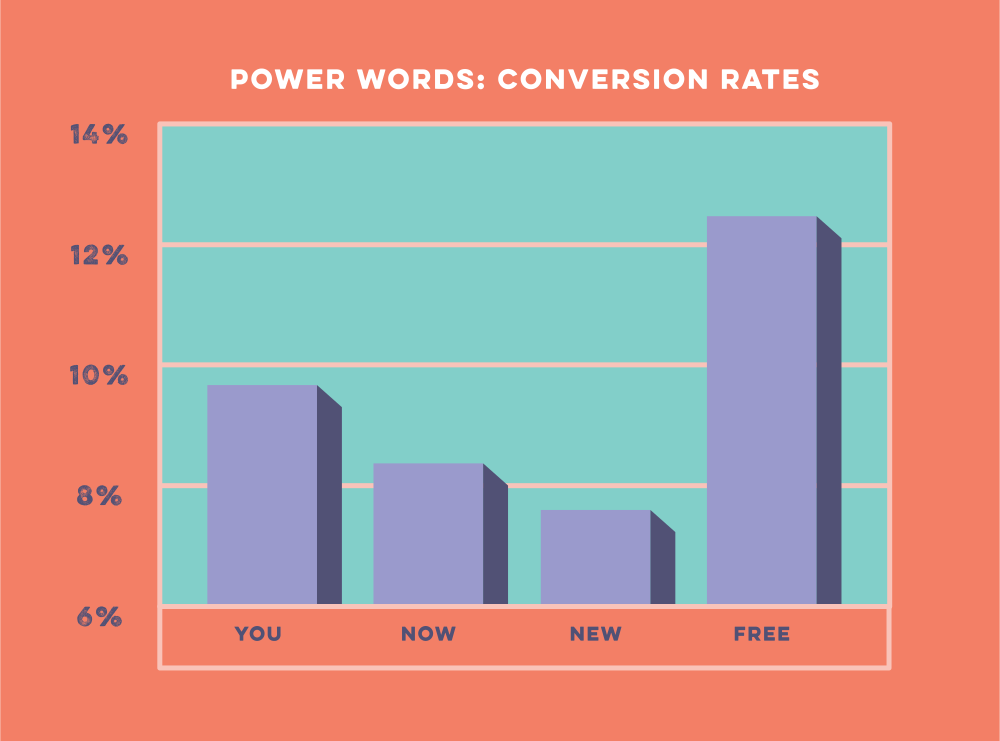
How you word your call to action is just as important as where you position it. The copy found on call-to-actions can express urgency or importance. The CTA can call upon human emotions or present opportunities as “too good to pass.” Choose your words wisely when creating CTAs. Check out the graph below breaking down the conversion rates of familiar words seen on calls to action.
Understanding Your Online Video’s Performance
Using video analytics to optimize and analyze online video is sort of like fishing. You pack your poles and head down to the spot where you hear the fish are biting. You bait your hook, cast your line and wait for a nibble.
You set out with the right gear where you think the audience is biting. But if nothing’s landing, you don’t pack up—you tweak the strategy. Try a different spot. Use different bait. Shift the timing.
That’s what A/B testing does for your video content. You try different versions—CTAs, thumbnails, timing, placement and track what gets results.
You might host and share your video where your audience is most active. You might test it on your homepage, in a newsletter, or as part of a paid campaign. But in the end, the proof is in the playback. Video analytics tell you what’s really working—and what needs work.
They let you measure engagement, pinpoint drop-offs, and connect viewer behavior to conversions.
📊 Key Questions to Ask When Reviewing Video Analytics
- Which videos are performing best? (Look at views, shares, and comments)
- Where are viewers coming from? (Traffic source: social, email, direct, etc.)
- How long are they watching? (Average watch time and drop-off points)
- How many unique viewers do you have?
- What percentage of viewers hit play and stay engaged?
- Are they watching 25%, 50%, or all the way through?
- What’s the average play duration per viewer?
- What’s the total overall play time for the video?
- Are viewers taking action—before, during, or after watching?
- Which parts of the video are getting the most replays or skips? (Stream position)
- Are they watching on mobile, desktop, or both?
Before You Go: Quick CTA Checklist
✔️ Is your CTA clear and concise?
✔️ Does it match the intent of the viewer at that point in the video?
✔️ Have you tested placement (pre-roll, mid-roll, end-roll)?
✔️ Are you tracking conversions by CTA type (text/image/HTML)?
✔️ Are you A/B testing CTA copy or design?
What Are Your Marketing Video Goals?
These are basic questions you should answer, but it all comes down to the intended purpose or goal of your video. What is it supposed to accomplish? Generating leads? Converting viewers to customers? Driving brand awareness? Or directly engaging a target audience?
Every piece of content, especially video, needs a strategic plan that speaks to the type of video content your brand aims to produce: educational, entertaining, practical, etc. Ask yourself who this content is intended for (with as much demographic detail as possible) and what the content is helping the audience accomplish.
If the project exceeds the capacity of your in-house departments, it is best to seek an outside creative video agency to aid with content creation and distribution. Here’s an article we published a while back that explains how our process works and the things we consider when producing a video.
Please contact us to set up a free consultation for your next online video.
FAQs
What should you do after your marketing video is finished?
After your video is finished, decide where it will live, what purpose it serves, and who it is intended to reach. A finished video needs a distribution plan, clear goals, and video analytics to help measure whether it’s actually working.
Why are video analytics important?
Video analytics show how people interact with your video. They can reveal views, watch time, engagement, drop-off points, traffic sources, viewer behavior, and conversions, helping you improve performance instead of guessing what works.
What video metrics should you track?
Important video metrics include total views, unique viewers, average watch time, overall play time, engagement rate, drop-off points, replayed sections, traffic sources, device type, click-through rates, and conversions.
How can video analytics improve conversions?
Video analytics help identify where viewers lose interest, which calls to action perform best, and when people are most likely to act. With that information, you can adjust placement, messaging, thumbnails, CTAs, and distribution strategy to improve results.
What is a video CTA?
A video CTA, or call to action, is a prompt that tells viewers what to do next. That might include signing up, scheduling a consultation, downloading a resource, joining an email list, or visiting a product page.
Where should a CTA appear in a video?
A CTA can appear at the beginning, middle, or end of a video. The best placement depends on the goal of the video and how engaged the audience is at each point. Testing different placements is the best way to find the sweet spot.
How does A/B testing help video performance?
A/B testing lets you compare different versions of a video element, such as CTA copy, CTA placement, thumbnails, video length, or landing page placement. By testing variations, you can see which version gets more engagement and conversions.
Why does video placement matter?
Video placement affects whether people see, watch, and act on your content. A video may perform differently on a homepage, landing page, email campaign, social post, paid ad, or newsletter, so placement should match the video’s purpose and audience.
How can branded video players improve the viewing experience?
Branded video players can include custom colors, logos, cover frames, and other design elements that make the viewing experience feel more polished and on-brand. This helps your video feel like part of a complete brand experience.
What questions should you ask when reviewing video analytics?
Ask which videos are performing best, where viewers are coming from, how long they are watching, where they drop off, whether they take action, what device they use, and which parts of the video get replayed or skipped.
What are good goals for a marketing video?
Good marketing video goals include generating leads, converting viewers into customers, building brand awareness, educating an audience, increasing engagement, supporting sales, or explaining a product or service more clearly.
When should you work with a creative video agency?
You should work with a creative video agency when your in-house team needs help with strategy, production, optimization, distribution, or analytics. A strong agency can help make sure your video is not only well-produced but also aligned with your marketing goals.