

Explainer Videos: A Better Way to Explain, Engage, and Connect
Video has become a standard part of modern marketing and for good reason. Some ideas are simply easier to understand when you can see them.
That’s where explainer videos shine.
A great explainer video can take a complicated product, service, process, or idea and turn it into something clear, memorable, and even entertaining. Instead of asking your audience to dig through paragraphs of copy or decode industry jargon, you can show them what matters in a minute or two.
The best explainer videos combine a smart script, strong visual storytelling, good pacing, sound design, and a little personality. Done well, they don’t just explain what you do. They help people understand why they should care.
And if you can make someone smile along the way? Even better.
What Is an Explainer Video?
An explainer video is a short, focused video designed to communicate a product, service, process, or idea in a clear and engaging way.
Animation and motion graphics are especially useful because they allow you to visualize concepts that may be difficult—or impossible—to film.
You can turn data into motion. Show how several systems communicate. Shrink the viewer down and take them inside a product. Use visual metaphors to explain ideas that would otherwise require three paragraphs and a flowchart.
That creative flexibility is a big part of what makes explainer videos so effective.
But the animation itself is only part of the equation.
A strong explainer starts with a good script. The goal isn’t to cram every feature, service, and company accomplishment into 90 seconds. It’s to identify what your audience needs to understand, simplify the message, and build the visuals around it.
In other words, say less—but make it mean more.
Types of Explainer Videos
There’s no single formula for an explainer video. The right approach depends on the message, audience, product, brand, and budget.
Animated Explainer Videos
Animated explainer videos are ideal for products and services that benefit from visualization.
They’re especially effective for SaaS platforms, technology companies, healthcare, financial services, complex workflows, abstract ideas, and anything else that becomes easier to understand once you can actually see how it works.
Animation also gives you enormous creative flexibility. You’re not limited by locations, actors, weather, physics, or whether your product even physically exists yet.
If you can imagine it, there’s a good chance we can animate it.
Live-Action Explainer Videos
Sometimes the best way to build trust is to put a real person on camera.
Live-action explainers work particularly well when people are central to the story, when you want to showcase a physical product, or when the personality behind the company matters.
They can also borrow from the increasingly popular user-generated-content style.
And here’s a little secret: some of that wonderfully casual, “someone just happened to film this on their phone” content is considerably more produced than it looks.
Your neighbor Sarah may not actually be running the production.
Screencast Explainer Videos
For software and digital products, sometimes the smartest thing you can do is simply show the product working.
Screencast videos combine screen recordings with narration to walk viewers through an interface, platform, or feature.
They don’t have to feel like software training from 2007, either.
Motion graphics, animated callouts, transitions, typography, and visual highlights can reinforce the important ideas while keeping the viewer focused on what matters.
Whiteboard and Hybrid Explainer Videos
Whiteboard videos use illustrated imagery and narration to guide the viewer through an idea step by step.
They’re still useful for certain applications, although modern motion graphics often provide more visual flexibility.
There’s also no rule saying an explainer needs to use only one technique.
Live action can transition into animation. Product footage can be combined with motion graphics. Screencasts can live inside a fully animated environment.
The format should follow the story—not the other way around.
Why Explainer Videos Work
The real strength of an explainer video is its ability to make complicated things feel simple.
That’s important because confusion kills momentum.
If someone lands on your website and can’t quickly understand what your company does, how your product works, or why it matters to them, you’re asking that person to work awfully hard just to become interested.
An explainer video can remove some of that friction.
Think of it as a digital handshake.
It introduces the idea, establishes some personality, builds confidence, and gives the viewer enough information to decide whether they want the conversation to continue.
That’s especially valuable for technical products and unfamiliar services.
Text might explain that your SaaS platform integrates multiple data sources, automates workflows, synchronizes systems, and generates real-time reporting.
Animation can show it happening.
A good visual metaphor may communicate in three seconds what would otherwise require an entire paragraph.
That’s the difference between simply delivering information and creating understanding.
Ideas Limited Only by Animated Imagination
This is where the real fun begins.
Unlike a traditional production, animation doesn’t require a location, a crew, or even the laws of physics.
Want to visualize your SaaS platform synchronizing with a dozen APIs in real time?
Easy.
Want to shrink the viewer down and walk them through your product interface from the inside?
Done.
Want a tap-dancing unicorn to sell gourmet jelly beans?
We can discuss wardrobe.
Motion graphics make the invisible visible.
Data can flow. Dashboards can light up. Networks can connect. An abstract business process can suddenly become something your viewer understands without needing a degree in systems engineering.
And animation isn’t limited to technology.
It can explain healthcare procedures, financial products, manufacturing processes, corporate initiatives, consumer products, nonprofit missions, internal communications, or virtually anything else that benefits from visual storytelling.
The trick is not using animation simply because you can.
The visuals should serve the idea.
A well-designed explainer uses imagery, movement, narration, music, and sound together to create those little “aha!” moments when something complicated suddenly makes sense.
Entertain While You Explain
There’s another advantage to all this creative freedom:
You don’t have to be boring.
People are being marketed to constantly. They’ve seen the generic corporate spokesperson. They’ve seen the stock footage handshake. They’ve watched the executive walking purposefully through a hallway while inspirational music swells in the background.
Sometimes you need something more memorable.
Think of an animated explainer as your product’s onboarding wizard with charisma.
It understands the viewer’s problem, gets to the point, explains the solution, and makes your sophisticated technology—or complicated service—feel surprisingly approachable.
That doesn’t mean every video needs jokes, cartoon characters, or dancing typography.
Entertainment can simply mean good pacing, an unexpected visual metaphor, beautiful design, clever writing, or an idea presented in a way the viewer hasn’t seen 100 times before.
The goal is to respect your audience’s time while earning their attention.
That’s when an explainer stops feeling like a presentation and starts feeling like a story.
Not All Explainer Video Companies Are the Same
Search for an “explainer video company” and you’ll find no shortage of options.
Some are extraordinarily inexpensive.
And there’s usually a reason.
Template-driven production can certainly have its place, particularly when budget is the primary consideration. But if the finished product is supposed to represent your company, your technology, or your brand, generic visuals can create a generic impression.
A professional animation studio should begin by understanding the message.
Who are we talking to?
What do they need to understand?
What problem are we solving?
What should they remember when the video ends?
From there, the visual language should feel like a natural extension of your brand rather than something your logo was dropped into at the last minute.
Depending on the project, that might mean fully custom illustrations, stylized graphics, 2D animation, typography, 3D elements, modified third-party assets, or a combination of approaches designed around the production budget.
Then there’s sound.
Great animation with bad sound is still bad video.
Music establishes tone. Voiceover establishes personality. Sound effects add weight, texture, and rhythm to movement.
When those elements work together, the finished video feels intentional.
Ultimately, a professional explainer video should look like you, sound like you, and feel like you.
Anything less risks making your company look like everyone else.
That’s why we view explainer videos as more than animation projects. They’re strategic storytelling assets that should fit naturally into the larger marketing ecosystem.
How Long Should an Explainer Video Be?
For most marketing explainers, 60 to 90 seconds is a very good target.
That’s enough time to establish the problem, introduce the solution, demonstrate the value, and give the viewer a clear next step.
And from our experience, shorter is usually better.
That doesn’t mean every video should be exactly 90 seconds.
Some ideas can be communicated beautifully in 30 or 45 seconds. Others genuinely need two minutes.
Long-form content also has an important role. A deeper product walkthrough, educational video, customer story, or technical presentation may need considerably more time.
Think of the short explainer as the handshake.
Long-form content is the conversation that follows.
The important distinction is focus.
A tutorial might walk someone through an entire process step by step. An explainer should usually communicate one central idea.
If you try to squeeze your entire website, sales presentation, product manual, company history, and mission statement into one animation, nobody wins.
Especially the viewer.
Mighty Fine Pro Tips for Explainer Video Structure
Start With a Strong Script
A great explainer is usually built on a very simple structure:
- Identify the audience’s problem or need.
- Introduce the solution.
- Explain how it works.
- Demonstrate the value.
- Give the viewer a clear next step.
Keep the language conversational and aligned with your brand.
If something can be said in eight words instead of 20, use eight.
Let the Visuals Do Some of the Talking
One of the biggest mistakes in explainer videos is using animation to illustrate every word of the narration literally.
Narrator says “computer.”
Computer appears.
Narrator says “money.”
Dollar sign appears.
Narrator says “growth.”
Arrow goes up.
Congratulations. We’ve created animated clip art.
Instead, use visual metaphors and sequences that add another layer to the narration.
The voiceover and visuals should complement each other, not compete to say exactly the same thing.
Think IKEA instructions—but actually helpful.
Don’t Cram Everything Into One Video
If you have five different audiences or six different product features that require explanation, consider creating a series.
Short, focused videos are easier to watch, easier to share, and easier to deploy throughout a marketing funnel.
One giant explainer trying to accomplish everything usually accomplishes less.
Give Sound the Attention It Deserves
Music creates emotion before most viewers even realize it.
Sound effects give movement weight.
Voiceover creates personality.
These elements should work together rather than fighting for attention.
Even the greatest movie scene would feel awfully strange without a soundtrack.
Your explainer deserves the same consideration.
Where Should You Use an Explainer Video?
One of the advantages of investing in a strong explainer is that it doesn’t have to live in one place.
A well-produced video can work across your entire marketing ecosystem.
Your Website
A homepage or product-page explainer can quickly introduce visitors to what you do and why it matters.
It’s particularly useful when the offering is unfamiliar or requires more explanation than a headline and a few bullet points can provide.
Landing Pages
Pairing a focused explainer with a focused landing page gives visitors two ways to understand the offer: watch or read.
The video handles the story while the surrounding page provides supporting details and the conversion path.
Sales Emails
Instead of sending prospects another wall of text, give them a concise video that introduces the product, answers the central question, or reinforces your pitch.
A good explainer can become a salesperson that never has scheduling conflicts.
Social Media
A full-length explainer can also become the raw material for shorter social content.
Break it into individual ideas. Reformat sequences vertically. Pull out an interesting animation or a particularly strong line from the narration.
One production can generate multiple pieces of content.
YouTube
YouTube gives your explainer a permanent home outside your website and creates another opportunity for people to discover your company through search.
Make the title and description useful, include relevant links, and treat the upload as a marketing asset rather than a video archive.
Video Advertising
Explainers can also be adapted for video advertising.
Paid campaigns often benefit from shorter edits built around individual pain points, features, industries, or customer segments rather than simply running the full explainer everywhere.
One Explainer, Lots of Mileage
A good explainer video shouldn’t be viewed as a one-and-done asset.
Think of it as a content engine.
The full animation might live on your website and YouTube.
Then individual sequences can become social videos.
The script can become the foundation for an article.
Still frames can be used in presentations or sales materials.
Sections can support onboarding or training.
Audio can potentially be repurposed.
A 90-second animation may contain dozens of individual creative assets that can continue working long after the original video launches.
That’s where custom production can generate considerably more value than simply looking at the cost of one finished video.
You’re not just buying 90 seconds.
You’re building a library.
How Do You Measure the Success of an Explainer Video?
Views are useful, but they’re only one piece of the picture.
The right metrics depend on what the video was designed to accomplish.
For a marketing explainer, you might look at:
- Watch time
- Completion rate
- Website engagement
- Click-through rate
- Form submissions
- Demo requests
- Leads
- Conversions
- Sales activity
You can also learn a lot by looking at where viewers stop watching.
If half the audience disappears at the same moment, that tells you something.
Video marketing should be treated like any other marketing activity: establish the objective, measure performance, learn from the results, and improve the next campaign.
Ready to Explain Something Complicated?
Creating an effective explainer video isn’t simply a matter of moving some graphics around and adding a voiceover.
It starts with understanding what makes your product, service, or idea valuable.
From there, we develop the message, write the script, establish a visual direction, and combine animation, professional voice talent, music, and sound design into a story your audience can actually understand.
The objective is simple:
Explain clearly. Look great. Keep people interested.
If your company has something worth explaining, set up an informative consultation and tell us about it.
Frequently Asked Questions
What is an explainer video?
An explainer video is a short, focused video that explains a company’s product, service, process, or idea in a clear and engaging way. Explainers often use animation, motion graphics, voiceover, and visual storytelling to make complicated information easier to understand.
How long should an explainer video be?
Most marketing explainer videos work well in the 60-to-90-second range, although the right length depends on the message. The goal is to communicate the important idea without adding information simply to make the video longer.
What are the main types of explainer videos?
Common formats include animated explainer videos, live-action explainers, screencast videos, whiteboard videos, and hybrid productions that combine several techniques. The best approach depends on the audience, subject, brand, and marketing objective.
What makes a good explainer video script?
A good script focuses on the audience rather than the company. It identifies the problem, introduces the solution, communicates the value clearly, and gives the viewer an obvious next step. Good scripts are conversational, concise, and designed to work together with the visuals.
Are animated explainer videos better than live-action videos?
Not necessarily. Animation is particularly useful for technology, SaaS products, data, workflows, abstract ideas, and anything difficult to demonstrate physically. Live action may be a better choice when people, personality, physical environments, or real-world products are central to the story.
Sometimes the best answer is both.
Where can you use an explainer video?
Explainer videos can be used on homepages, product pages, landing pages, sales emails, YouTube, social media, presentations, advertising campaigns, onboarding materials, and training content.
A strong explainer can often be repurposed into several additional marketing assets.
How do you measure whether an explainer video is working?
Start with the objective.
Depending on the campaign, useful metrics might include watch time, completion rate, clicks, engagement, leads, demo requests, form submissions, conversions, and sales.
A video with fewer views that generates qualified leads may be considerably more successful than one with thousands of views and no action.
How much does a custom animated explainer video cost?
The cost of custom animation varies considerably depending on the concept, length, illustration style, complexity of the animation, script development, voiceover, music, sound design, and number of deliverables.
A template-based animation and a completely custom production are very different products, so the best way to establish a realistic budget is to define the creative scope first.
Explainer Videos Boost Visibility and Conversions
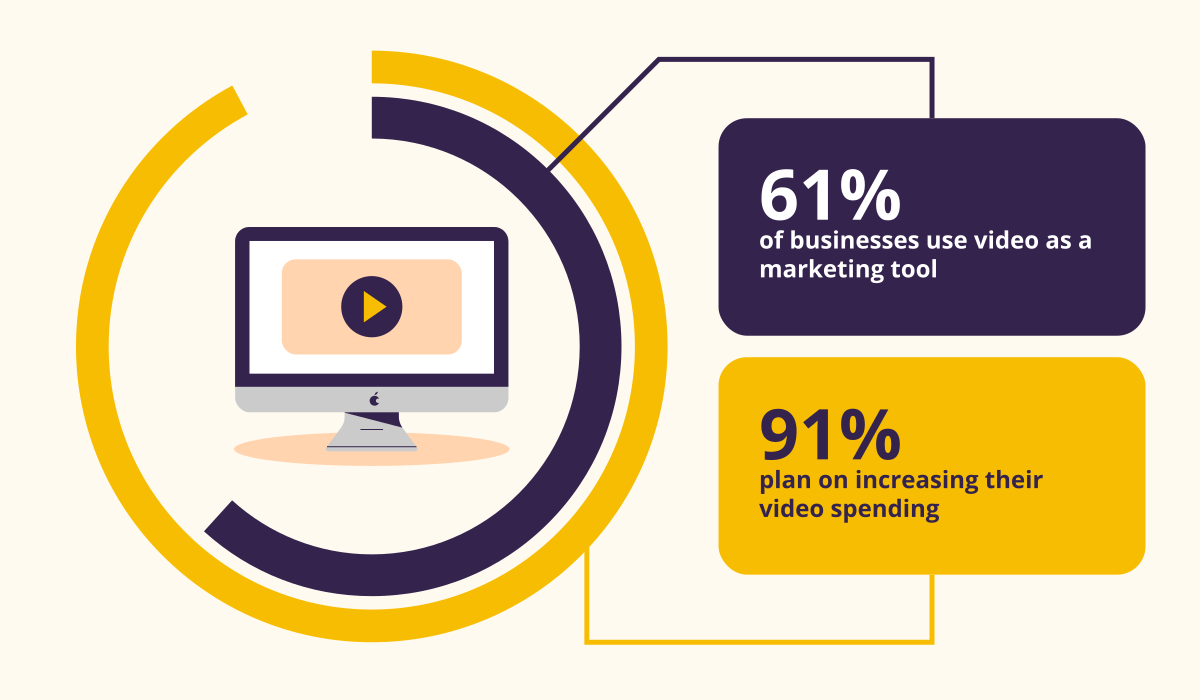
As more people turn to video for their information, the explainer video has secured its place among essential marketing tools. The rise of video content is evident in the number of businesses incorporating it into their digital marketing strategies. Video content has grown in popularity. According to Wyzowl’s State of Video Marketing 2023, in 2016, just 61% of organizations included video in their marketing plan. That number has now risen to 91%. This is the highest point ever recorded since Wyzowl began keeping track of this data in 2016.
The best explainer videos have set new standards in marketing effectiveness, showcasing how high-quality scripts, engaging pacing, and clear messaging can significantly boost conversion rates for startups and businesses.
As a result, don’t ignore this powerful statistic: marketing across industries is more competitive than ever, and explainer videos have had a wonderful impact on business visibility and engagement.
Marketing Explainer Videos
What is an Explainer Video?
Explainer videos, simply put, are animated videos that communicate a company’s message in a short, concise way – with personality. Explainers can convey your message through creative storytelling, facilitating the use of visual metaphors to represent ideas that give the viewer a unique perspective on a story, product, or service. And the best part? Explainer videos can even put a smile on your client’s face. Now, that’s powerful marketing.
A well-crafted explainer video script is essential for capturing the viewer’s attention and ensuring your message is clear and engaging. That's part of the reason visitors spend 88% more time on landing pages that include video
Source: Forbes / Insivia
A good explainer video relies on a clear and concise video script that communicates your product’s value and motivates viewers to take action. To make an explainer video, the process typically starts with developing a strong video script, followed by storyboarding, animation, and editing. For inspiration, you can look at explainer video examples to see the variety of approaches and styles that effectively engage audiences. The value proposition is that you can deliver complex messages that can be clearly understood by a broad audience.
Types of Explainer Videos
Explainer videos come in a whole range of styles, each designed to connect with audiences in different ways and suit various business needs. The most popular types include live-action explainer videos, animated explainer videos, whiteboard explainer videos, and screencast explainer videos.
Live-action explainer videos feature real people and real settings, making them perfect for brands that want to add a personal touch or showcase physical products. These videos are excellent for building trust and putting a face to your business. There's a giant surge now in user-generated content. Here's a little secret: it might look like it's homegrown, but a lot of these are highly produced and not necessarily done by your neighbor Sarah.
Animated explainer videos are a favorite for businesses looking to engage audiences with vibrant visuals and creative storytelling. Whether you want to explain a new app or break down a service, animated explainer videos can bring any idea to life, making even the most complex processes easy to understand and fun to watch.
Whiteboard explainer videos use hand-drawn animations and voiceover to guide viewers through a concept or process. They’re engaging, easy to follow, and great for breaking down complex ideas in a simple, memorable way. While still in use today, newer animation styles offer more dynamic visuals and storytelling potential—making them a stronger choice for brands looking to elevate engagement.
Screencast explainer videos are all about showing your product in action. By recording your screen and adding clear narration, you can give audiences an inside look at your software or platform, making it easy for them to see the benefits firsthand. You can also reinforce some of the core ideas with unique 2D animations to make the content more engaging.
No matter which style you choose, explainer videos are a powerful way to explain, engage, and connect with your audience—helping your business stand out in an over-crowded market.
Benefits of Explainer Videos
Explainer videos are marketing power tools. They take complex ideas and transform them into clear, memorable stories that grab attention—and keep it. Whether you're introducing a product, simplifying a service, or educating your audience, explainer videos do it faster, better, and more effectively than text ever could.
But clarity is just the beginning. A great explainer video builds trust, humanizes your message, and makes your brand instantly more relatable. Think of it as your digital handshake—warm, confident, and persuasive.
They also deliver serious ROI. Video content improves engagement metrics across the board—boosting conversions, lowering bounce rates, and increasing time on site. Google loves it too: you’re 50× more likely to rank on the first page of search results when your website includes video. That’s because video content is faster to consume and more likely to be shared.
Let’s look at some recent stats:
- 82% of consumers say video has convinced them to make a purchase
Source: Wyzowl, State of Video Marketing 2024 - Including video in emails can increase click-through rates by 200–300%
Source: WebFX / Campaign Monitor - Video content is shared 12× more than text and images combined
Source: Wordstream / WebFX - Organic search traffic can increase by up to 157% for pages with video
Source: Brightcove / HubSpot - 74% of marketers say video delivers better ROI than static images
Source: Animoto / HubSpot
In short, explainer videos are more than just fun—they’re strategic assets that drive results across your entire marketing funnel.
Ideas Limited Only by Animated Imagination
Unlike traditional video shoots, explainer videos don’t need a location, a crew, or even the laws of physics. That’s the magic of animation—if you can think it, we can show it.
Want to visualize your SaaS platform syncing with a dozen APIs in real time? Easy. Need to shrink your viewer down and walk them through your product interface from the inside out? Done. Motion graphics make abstract concepts tangible, and they do it without the logistics, time, or cost of a live shoot.
Even better, explainer videos give you creative freedom to tell stories that resonate. You can use visual metaphors, stylized animation, and bold transitions to capture attention and hold it. Combined with a tight script, expressive voiceover, and smart design, animation becomes a tool for turning ideas into “aha!” moments.
In other words: you don’t just get to explain—you get to inspire, entertain, and educate all at once. That’s why the best explainer videos aren’t just informative. They’re unforgettable.
Explainer Videos = Emotional Connection
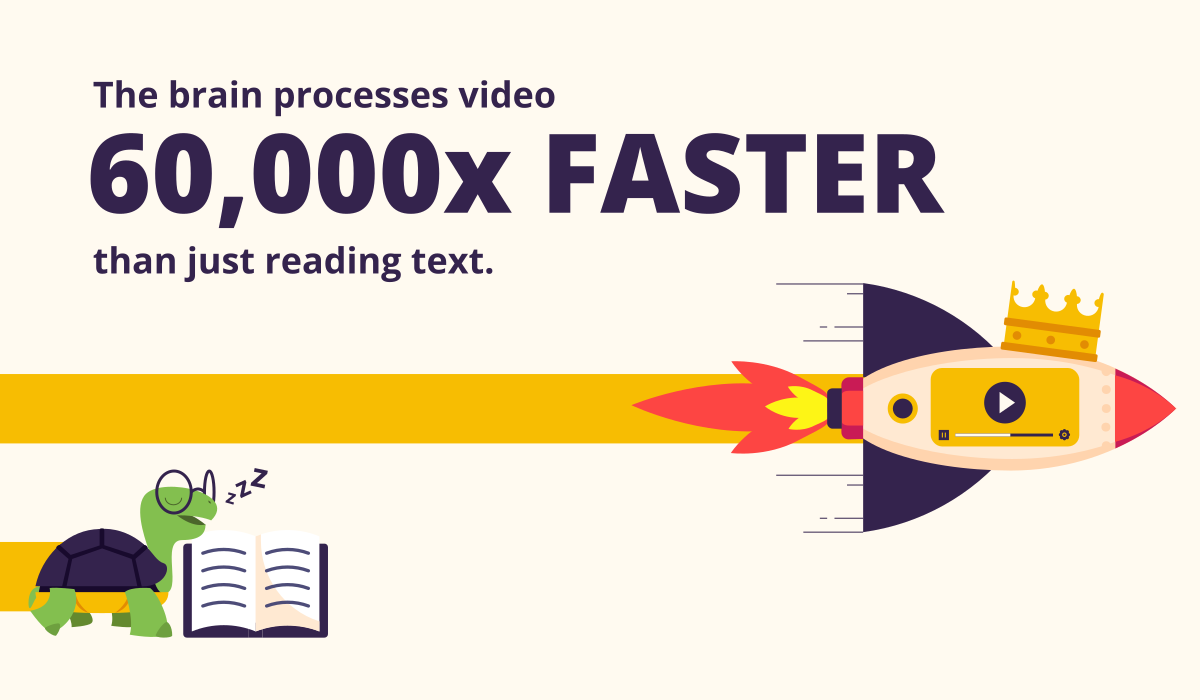
According to the article “Video vs Text: The Brain Perspective” by Psychology Today contributor Dr. Liraz Margalit, videos are processed by the brain 60,000 times faster than text. That’s a huge gap in processing speed. It’s the difference between riding your bike 20 miles and driving your car the same distance.
Given that the human brain can exert a lot less energy watching a video than reading an article, it’s safe to assume that people are going to choose video. By delivering an immersive experience to your customer, they can focus on the benefits of your product. Conversely, introducing a new product or idea through text can sometimes be confusing. This is especially true of new technology or highly technical products.
Dr. Margalit goes on to explain how video is better at producing emotion than words. In marketing terms, this makes video the golden goose. Pushing buttons is the fastest way to get people’s attention. If those buttons are happiness, curiosity, joy, excitement, and laughter, then you just hit the communication jackpot by presenting your message in an engaging manner.
Entertain, Explain, and Enchant: The Magic of Motion Graphics
Here’s where the real fun begins. With motion graphics, there are no limits—your explainer video can go anywhere, show anything, and be anyone. Want a tap-dancing unicorn to sell your gourmet jelly beans? Done.
Need something a little more… SaaS-y? Think of your explainer video as an onboarding wizard with charisma. It’s your product’s first handshake—animated, articulate, and effortlessly cool. It understands your user’s pain points, delivers clarity in under 90 seconds, and builds trust while making your advanced SaaS tech feel simple, human, and surprisingly approachable.
Motion graphics make the invisible visible—think data syncing, dashboards lighting up, or complex workflows made crystal clear. It’s the perfect medium to break down abstract ideas while keeping your viewer glued to the screen.
And let’s be honest: no matter who you’re talking to—doctors, CTOs, or startup founders—everyone prefers to be entertained. A punchy animated video almost always beats a talking-head elevator pitch droning over stock B-roll. (Still not sure what B-roll is? Here’s a cheeky explainer that makes the case perfectly.)
The difference comes down to execution. A great animated explainer doesn’t just tell your story—it brings it to life. At Mighty Fine Production Company, that starts with a thoughtful creative brief, a killer script, and custom visuals tailored to your brand.
Because when your video respects your audience’s time and keeps them entertained? That’s when the magic happens.
Too Good to Be True—Not All Animation Studios are the Same
Explainer videos are everywhere—and so are the companies that make them. These days, just search “explainer video company” and you’ll be flooded with studios offering plug-and-play solutions at too-good-to-be-true prices. But here’s the truth: not all explainer videos are created equal. And if you want one that actually works—the kind that simplifies the complex, boosts engagement, and drives conversions—you’ll need more than a cheap animation and a stock voiceover.
So what makes a great explainer video... well, great? Let’s break it down.
First, a high-quality animation studio will actually take your brand seriously. That means building your video around your existing identity—not shoehorning you into a cookie-cutter template. Great motion designers can visualize just about anything—from abstract ideas to real-world scenarios—using custom illustrations or stylized graphics that reflect your brand personality. Some projects might call for fully hand-drawn assets; others may use modified third-party graphics as a budget-friendly option with the right design polish.
And don’t overlook sound. A solid sound designer will craft a custom score or curate music that sets the right tone—because even the best visuals fall flat without the right audio support.
In the end, a professional explainer video should sound like you, look like you, and feel like a natural extension of your brand. Anything less risks making your business look generic—or worse, amateur. When you partner with a team that understands your goals and guides you through a seamless process, the result is more than just a video—it’s a strategic storytelling asset that pulls its weight across your entire marketing ecosystem.
How Long Should an Explainer Video Be
So, how do explainer videos work their magic? It comes down to the perfect mix of visuals, voice, and messaging. When done right, they take complex ideas and distill them into something clear, engaging, and easy to remember.
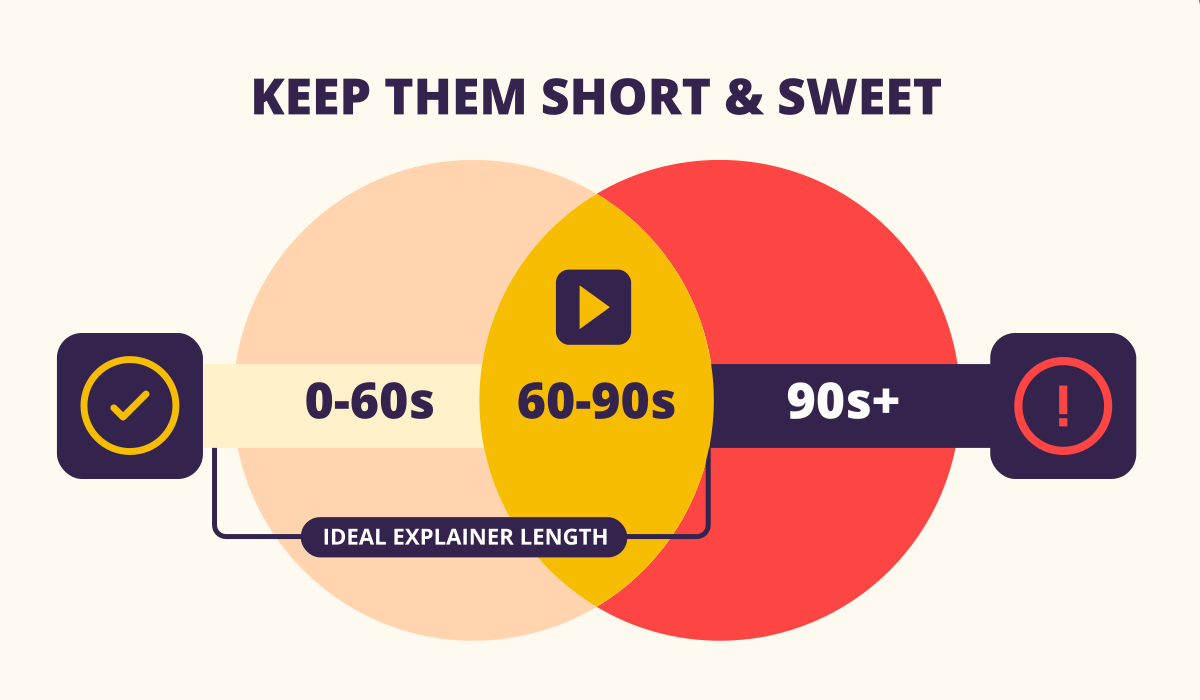
The sweet spot for explainer videos is typically 60 to 90 seconds. If you’re producing a video for advertising, keep it under two minutes, max. Attention spans are short, and clarity is king. The goal is to grab attention, deliver value, and leave your audience with a crystal-clear takeaway.
Of course, long-form video still has its place. It all depends on context. Short explainers are excellent for sparking interest, while longer videos can dive deeper when your audience is ready for more. Think of short videos as the handshake, and long-form as the conversation that follows.
Unlike tutorials, which walk viewers through a process step by step, explainer videos are built to deliver a single, focused message—and fast. They’re designed to captivate, not lecture.
There’s also flexibility in how they’re made. Explainer videos can take many forms: animation, motion graphics, live action, or a hybrid of styles. A live-action explainer, for example, uses real people to humanize your message and make your brand more relatable. Whatever the format, the goal stays the same—communicate clearly, connect emotionally, and keep things moving.
90 Second Explainer Videos – Keep it Short and Sweet
In most cases, you’ve got less than two minutes to make your pitch—so nailing your key selling points is non-negotiable. Most explainer videos land in the 60–90 second range. It’s the sweet spot: long enough to introduce your product, short enough to keep attention and make a strong first impression. From our experience, the shorter the better.
Because explainer videos are so focused, the production process is streamlined—meaning faster turnaround times and fewer headaches. In addition, smaller budgets. We typically charge $7000 to $10,000 a minute for an animated custom explainer.
Our copywriters specialize in clarifying your message, showcasing your core services, and highlighting your unique value—without losing your viewer’s interest. Whether you’re hands-on or happy to let us take the reins, we have the tools and experience to guide the process and get it done right.
Mighty Fine Pro Tips on Explainer Video Structure
Crafting an Engaging Script
- Start strong by addressing your audience’s pain points.
- Clearly explain how your product or service solves their problem.
- Use simple, brand-aligned language with a confident tone.
- Keep it concise—focus on what matters most.
- End with a clear, compelling call to action.
Simplifying Complex Concepts with Video
- Use visual metaphors to say more with less—a single image can communicate 20 ideas.
- Think of whiteboard or motion graphics like an IKEA manual… but actually helpful.
- Sync visuals, narration, and sound for seamless timing and flow.
- Ideal for tech, workflows, and abstract ideas—there’s no better way to explain.
- Don’t cram everything into one video. Create a series for snackable, easy-to-digest content.
Adding Music to Enhance Your Video
- Music sets the mood and instantly adds emotional weight.
- Match the tone—don’t let upbeat music fight with serious visuals (or vice versa).
- Add subtle sound effects to create impact—like a quiet stream with just the right ripple.
- Keep narration and audio in harmony—if they’re clashing, no one wins.
- And remember: even the best movie would fall flat without a soundtrack.
6 Places to Market Your Explainer Video
Investing in a solid explainer is one of the best marketing tools you can invest in. Not only will it help sell your product on your homepage, but you can leverage that explainer beyond the boundaries of your website and landing pages.
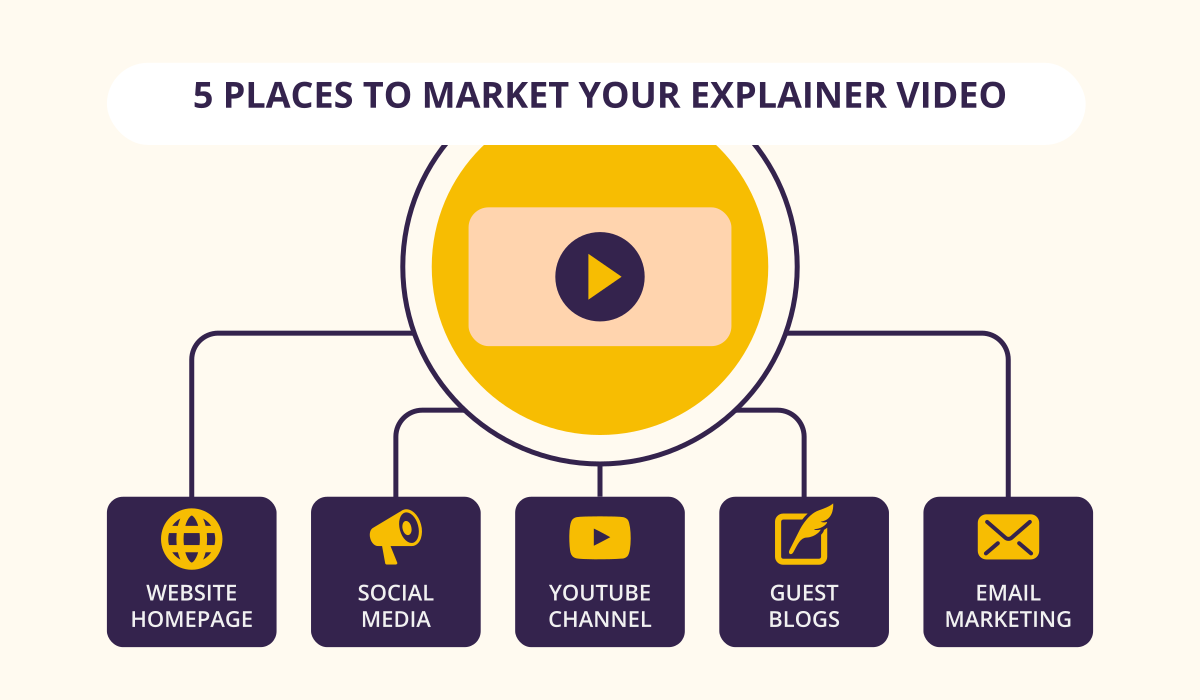
- Sales Emails Skip the wall of text. Drop your explainer video into an email with a snappy subject line and let the animation do the talking. Studies show emails with video can boost click-through rates by up to 300% (Campaign Monitor). Animated videos tend to outperform talking-head clips by grabbing attention faster and delivering your pitch in a more engaging format.
- Social media video dominates on every platform. According to HubSpot (2024), social media video gets 1200% more shares than text and image posts combined. Instagram Reels see 50%+ higher engagement than standard posts (Meta), and X (formerly Twitter) reports 2.5x more replies on tweets with video. Animated explainer videos are tailor-made for scroll-stopping social content—boosting reach, engagement, and brand recall.
- YouTube With over 2.7 billion users, YouTube is the world’s second-largest search engine. Uploading your explainer video here expands your discoverability, taps into search traffic, and gives you an evergreen asset that works long after campaigns end. Optimize titles, tags, and descriptions to get the most out of it.
- Blogs Give your blog content an upgrade by embedding a relevant explainer video. Video increases time on page by up to 88% (Wistia), keeps readers engaged, and helps communicate your message faster and more effectively. It’s a simple way to amplify your content while driving clicks to deeper pages on your site.
- Website Homepage First impressions matter. A homepage video instantly shows your visitors who you are and what you do—without making them scroll or read. Websites with video see 34% lower bounce rates and significantly higher conversion rates (Insivia). A short, high-impact explainer is one of the best tools for engaging visitors from the jump.
- Video Ads Video ads don’t just get noticed—they guide decisions. According to Google, 70% of shoppers say online video has helped them discover a new brand or product. Explainer videos work especially well in paid ads because they build awareness, answer questions, and build buyer confidence—all in one smooth, scroll-stopping package.

Extra Value: Repurposing and Sharing Explainer Videos
A well-made explainer video is more than a one-and-done asset—it’s a workhorse that delivers value across your entire marketing ecosystem. Yes, it may take a bigger budget up front, but that investment stretches far. One great video can be used in social campaigns, embedded on your website, dropped into sales decks, included in onboarding, or used as a training tool. That’s mileage.
You’re not just making a video—you’re building a content engine. Repurpose the footage into shorter clips for social, turn the script into a blog post, strip the audio for a podcast, or use key frames as infographics. The more you repurpose, the more reach you get without reinventing the wheel.
Bottom line: a strong explainer video pays for itself by working overtime across channels, saving time, boosting consistency, and driving results long after it's launched.
Measuring Success
Measuring the success of your explainer video is crucial to understanding its impact. Keep an eye on metrics like views, engagement, and conversion rates to gauge how well your video is performing. Additionally, track website traffic, lead generation, and sales to get a comprehensive view of its effectiveness.
By analyzing these metrics, you can refine your video marketing strategy and create even more effective explainer videos in the future. Remember, the goal is to continuously improve and adapt, ensuring your explainer videos deliver the best possible results for your business.

Ready to Get Started?
Mighty Fine Production Company streamlines the process of creating an explainer video, even though it’s not an easy task. After we identify your unique selling points, we’ll translate them into an exciting script. Through motion graphics, professional voiceover talent, and gorgeous sound design, we’ll tell your story. Use explainer videos to share your brand story and build a deeper connection with your audience. If you’re ready to take your company to the next level of digital marketing, set up a informative consultation today.
FAQs
What is an explainer video?
An explainer video is a short, focused video that explains a company’s product, service, process, or message in a clear and engaging way. Most explainer videos use animation, motion graphics, voiceover, and concise storytelling to make complex ideas easier to understand.
Why are explainer videos effective for marketing?
Explainer videos are effective because they quickly communicate value, hold attention, and make information easier to digest. They can improve engagement, increase time on page, support conversions, and help brands explain their message with more personality than text alone.
What are the main types of explainer videos?
The most common types include animated explainer videos, live-action explainer videos, whiteboard videos, screencast videos, and hybrid videos that combine multiple styles. Each format works differently depending on the audience, message, product, and marketing goal.
How long should an explainer video be?
Most explainer videos work best when they are between 60 and 90 seconds. That length is usually enough time to introduce the problem, explain the solution, highlight the value, and end with a clear call to action without losing the viewer’s attention.
What makes a good explainer video script?
A good explainer video script starts with the audience’s problem, clearly explains how the product or service solves it, uses simple brand-aligned language, and ends with a strong call to action. The goal is to say more with less and keep the message focused.
Are animated explainer videos better than live-action videos?
Animated explainer videos are often better for abstract ideas, SaaS products, workflows, technology, and complex services because they can visualize things that are hard to film. Live-action videos are useful when a brand wants to show real people, physical products, or a more personal human connection.
Where should you use an explainer video?
Explainer videos can be used on homepages, landing pages, sales emails, social media, YouTube, blog posts, video ads, sales decks, onboarding materials, and training content. A strong explainer video can become a flexible marketing asset across multiple channels.
How do explainer videos help increase conversions?
Explainer videos help increase conversions by making the value of a product or service easier to understand. They can reduce confusion, build trust, answer common questions, and guide viewers toward the next step in the buying process.
Can explainer videos be repurposed?
Yes. A well-made explainer video can be repurposed into short social clips, blog content, sales materials, infographics, podcast audio, onboarding content, and training assets. This helps extend the value of the original investment.
How do you measure the success of an explainer video?
You can measure success by tracking views, watch time, engagement, click-through rates, conversions, website traffic, leads, and sales. These metrics help show whether the video is attracting attention, holding interest, and supporting business goals.
How much does a custom animated explainer video cost?
According to the article, Mighty Fine Production Company typically charges $4000 to $10,000 per minute for a custom animated explainer video. Pricing can vary depending on the scope, animation style, script development, voiceover, sound design, and overall production needs.